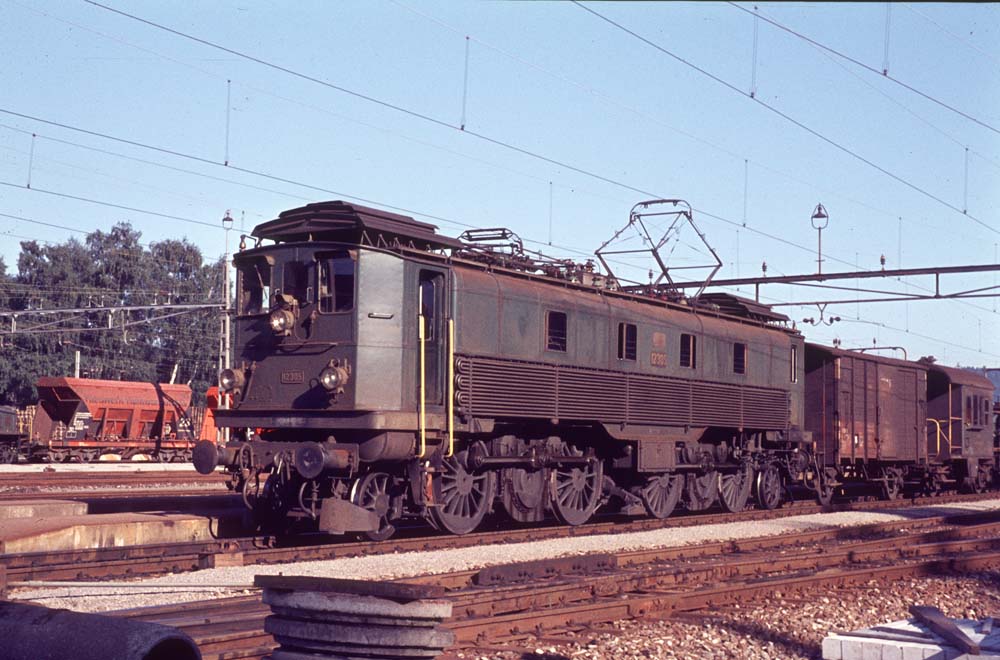
 When I first started taking photos of trains, the last Be 4/6 locomotives at Winterthur depot were eking out a living hauling general freight trains such as the 8049 from Zurich to Schaffhausen. During a lengthy stop at Bülach, the Be 4/6 re-formed the train with a lengthy shunting manoeuvre. On 7 September 1970, Be 4/6 12305 stands ready for departure. In the background, a Be 6/8 II with a gravel train is also waiting for the green light. Bülach, 7 September 1970 Photo: © Edi Meier, Bülach
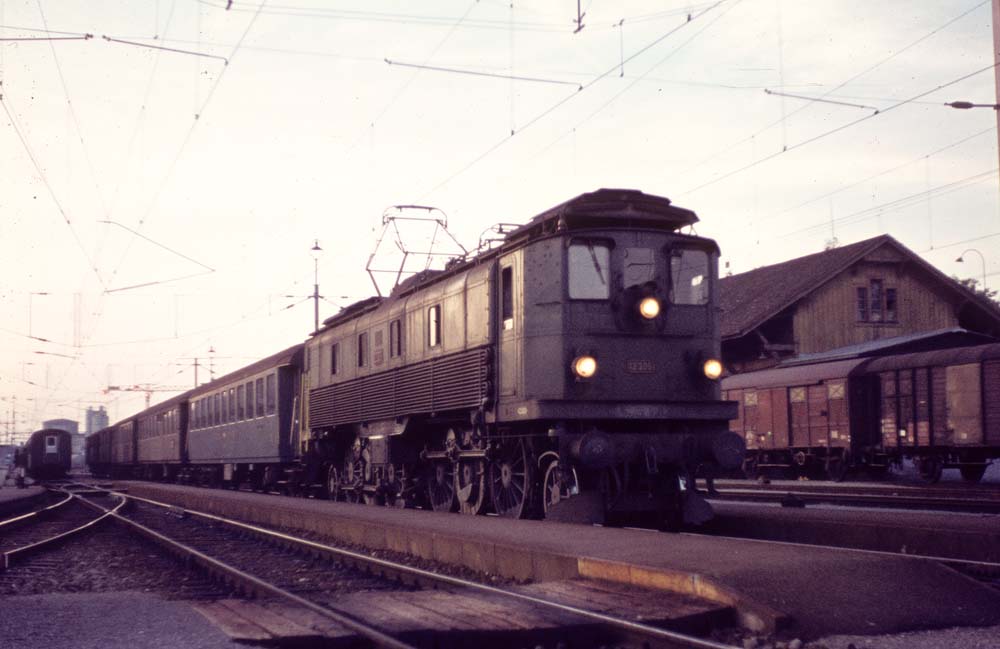 In 1970, there was one final scheduled service on Saturdays for Be 4/6 locomotives hauling passenger trains: train 2867 from Koblenz to Winterthur. On 19 September 1970, locomotive 12305 was assigned to this service and stands in Bülach, ready for departure, at the head of its train with heavy carriages. On 22 May 1971, this service came to an end and locomotive 12320 was assigned to it; at that time it was still green, today it is the historic locomotive… Bülach, 19 September 1970 Photo: © Edi Meier, Bülach
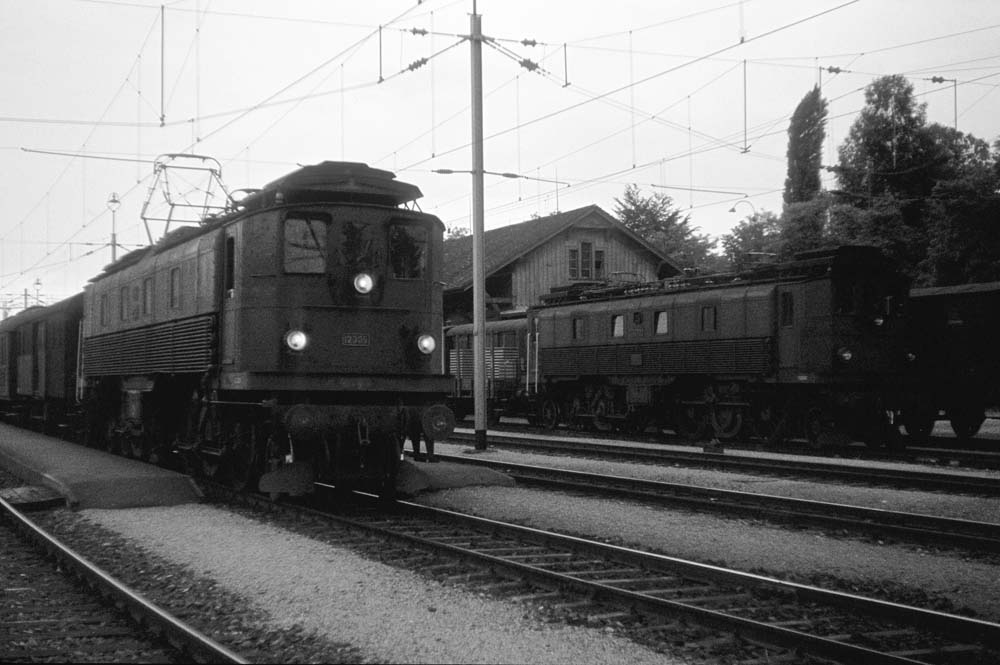 On 4 July 1970, locomotive Be 4/6 12333 was actually due to be assigned to this service. However, it had a breakdown in Bülach. To our surprise, a sister locomotive from Winterthur rushed to the rescue as a replacement, enabling this photograph to be taken with two Be 4/6 locomotives. On the passenger train that evening, the 2- or 3-axle luggage van was coupled directly behind locomotive Be 4/6 12305. Bülach, 4 July 1970 Photo: © Edi Meier, Bülach
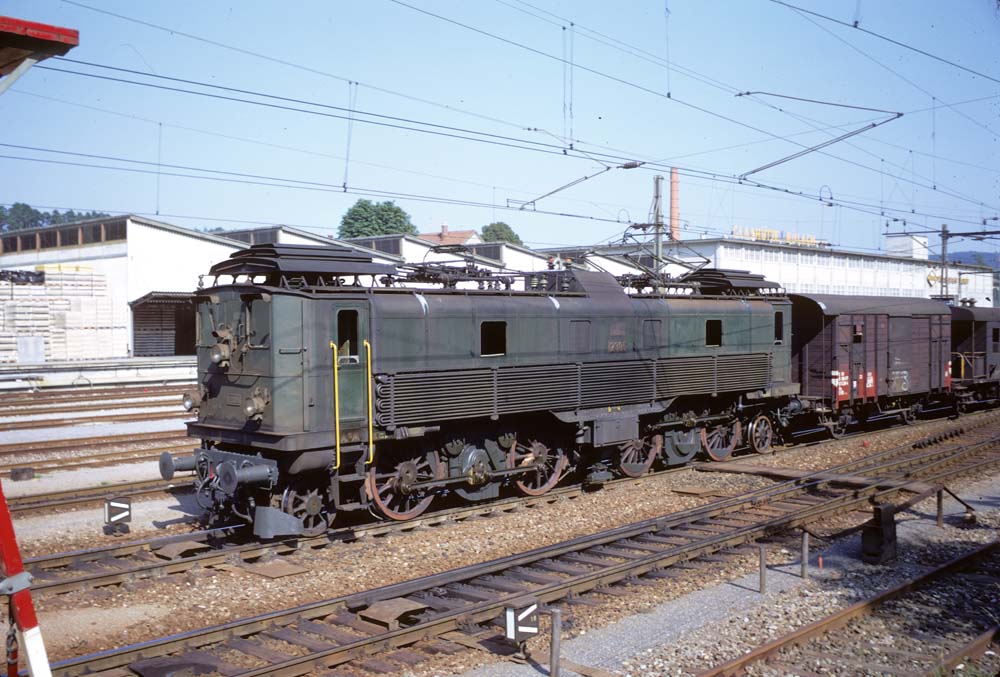 The service life of the Be 4/6 was drawing to a close in 1971 and a number of locomotives had already been taken out of service. It was therefore all the more surprising when Be 4/6 12305 returned to service from the Bellinzona workshops on 16 July 1971 following an R2 overhaul. With freshly painted buffer beams and silvery rust protection on the metal reinforcements along the roof edge, Be 4/6 12305 poses on 2 August 1971 in front of freight train 8049 Bülach – Schaffhausen. Incidentally, this was not the last overhaul on a green Be 4/6. Its sister locomotive 12339 underwent an R1 in 1973 and was the last to remain in service. Photo: © Edi Meier, Bülach
 |
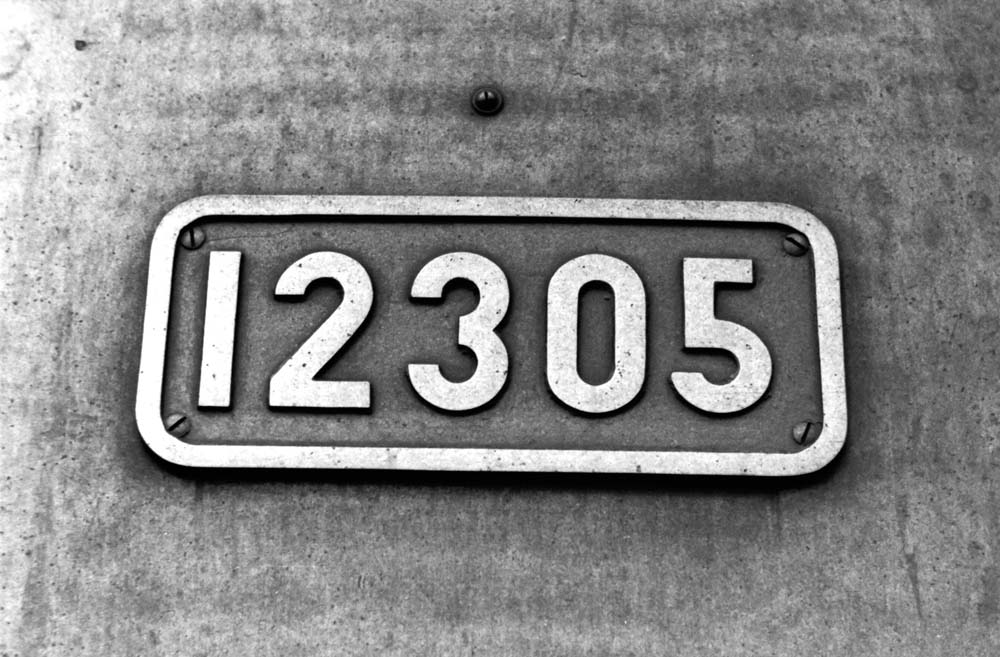 |
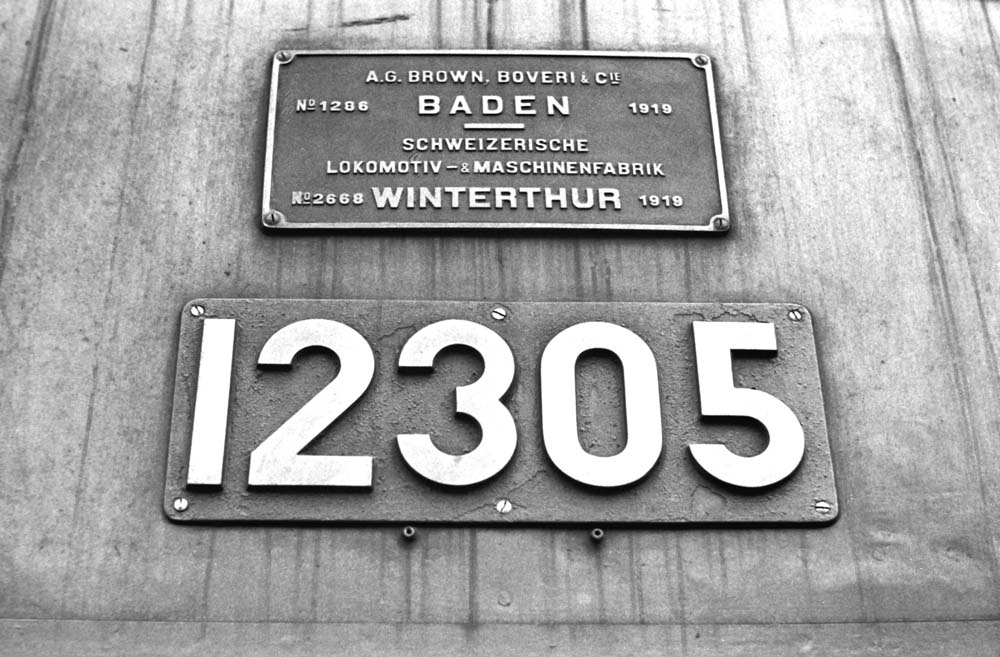
Speaking of overhauls and repairs: in 1969, the Be 4/6 12305 returned from Bellinzona following repairs.
My friend Stefan Unholz took a closer look and discovered that the number plate was secured on both sides with new, shiny screws, whilst the factory plate was held in place by old screws covered in rust dust. The numbers on the factory plate (SLM 2868 / BBC 1286) do not belong to locomotive 12305, but to its sister locomotive 12310. The screws on the number plate at the front appeared to be old.
What had happened during the repair? Based on the evidence, we assume that better-preserved parts from the side walls of 12310 were transferred to 12305. Incidentally, the Bellinzona Main Workshop denied that any such swap had taken place. One thing is certain: locomotive 12310 was at the Bellinzona workshop at the time and was reported as scrapped shortly afterwards. Photos: © Stefan Unholz, Winterthur (formerly Bülach)
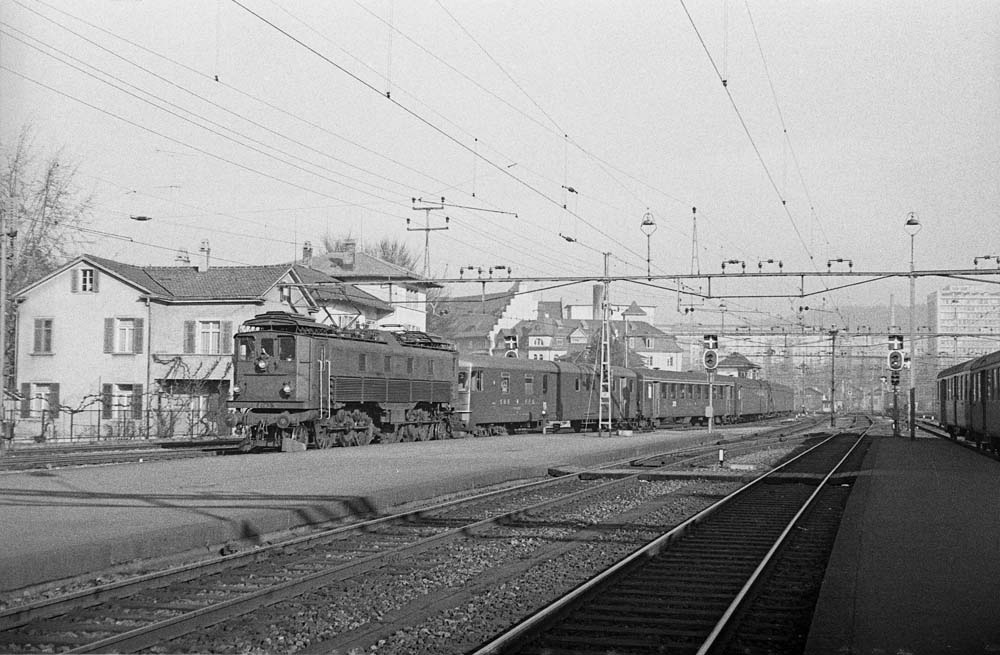 On 7 January 1972, the RBe 4/4 was missing from the scheduled shuttle service to Bülach. Be 4/6 12305 hauled the carriages into Winterthur station. The same thing had already happened on 17 December 1971. As I recall, on one occasion the Be 4/6 continued towards the marshalling yard after this shunting operation, and an RBe 4/4 sent from the depot took over the train waiting at the platform. On the other occasion, however, the locomotive remained at the head of the train and took it to Bülach. Photo: © Edi Meier, Bülach
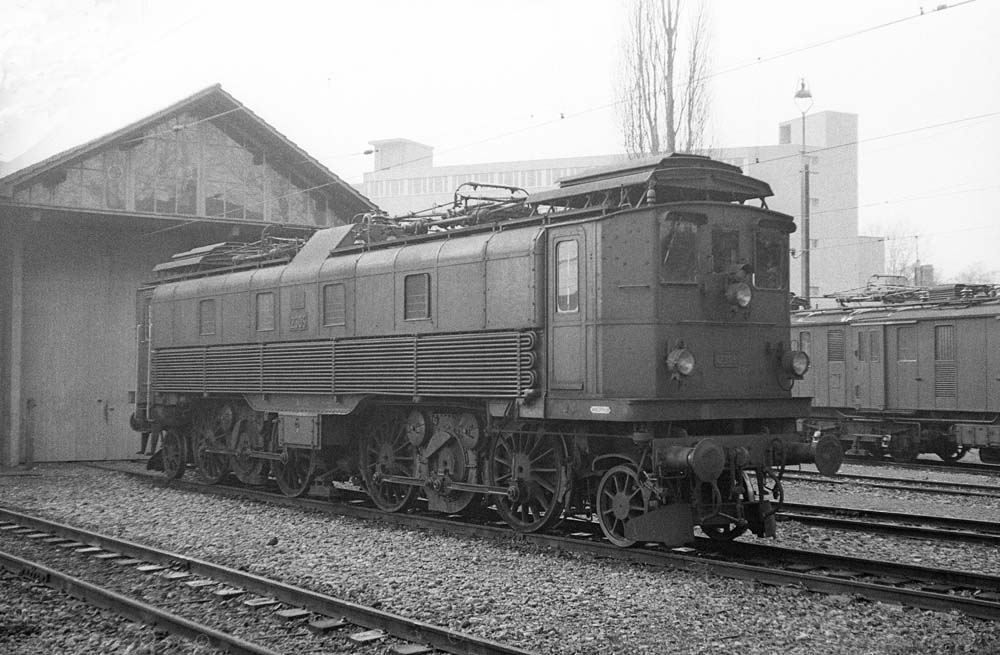 Of course, even a veteran needs a break now and then. On 17 January 1972, when this photograph was taken behind the Winterthur depot, Be 4/6 12305 was the oldest mainline locomotive still in regular service with the SBB. Photo: © Edi Meier, Bülach
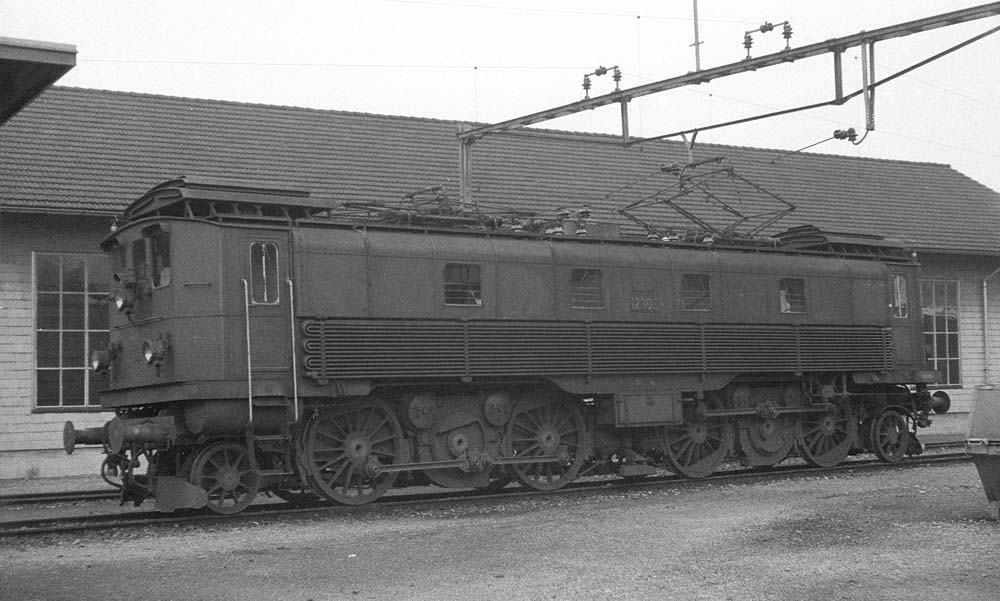 Fully rested! On 14 February 1972, Be 4/6 12305 gets ready for its next assignment at the Winterthur depot… Photo: © Edi Meier, Bülach
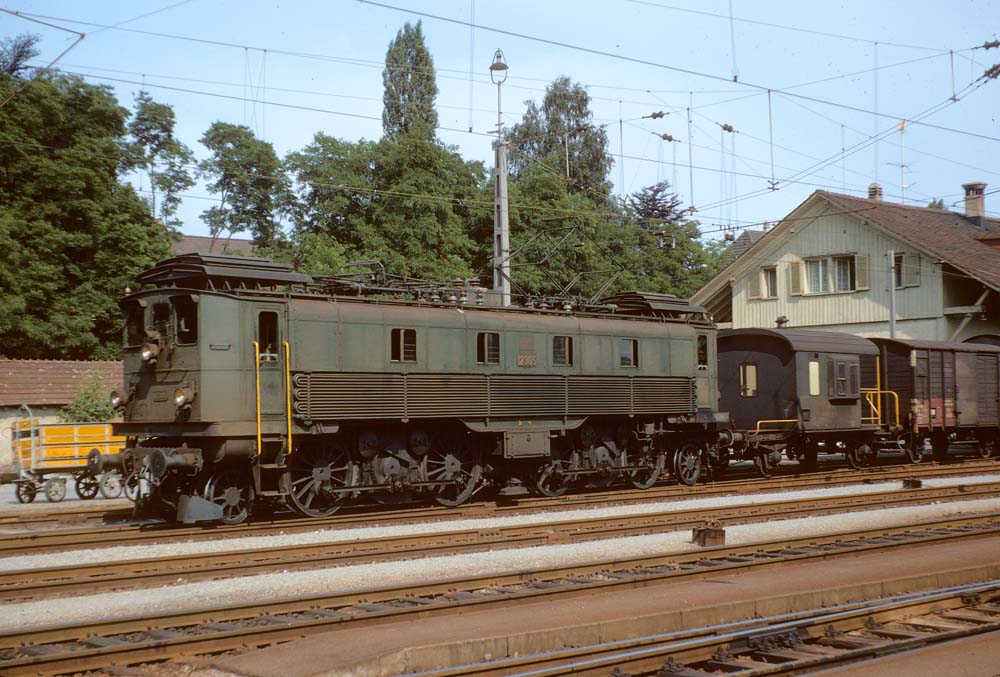 A year after the overhaul, on 19 July 1972, not much of the new paintwork was still visible. Clear oil marks once again appear at the bottom of the drive unit. The locomotive shunting in Bülach on the Winterthur side in front of the goods shed. Photo: © Edi Meier, Bülach
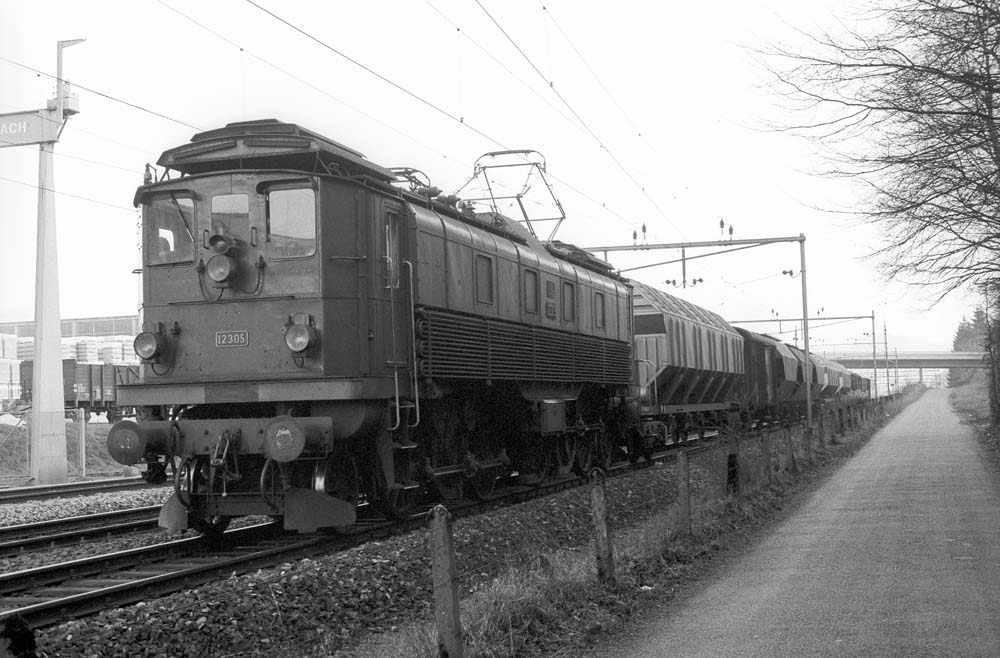 On 20 December 1974, a brand-new aluminium grain wagon was coupled behind the oldest SBB mainline locomotive, Be 4/6 12305. A stark contrast and a huge age difference. With long trains, shunting movements from the Zurich side to the Winterthur side sometimes had to venture far out onto the main line. We followed the action on the parallel road by bike… To the left of the locomotive, you can see the Bülach Welding Works, which were still in operation at the time and occasionally also engaged in the construction of rail vehicles… Photo: © Edi Meier, Bülach
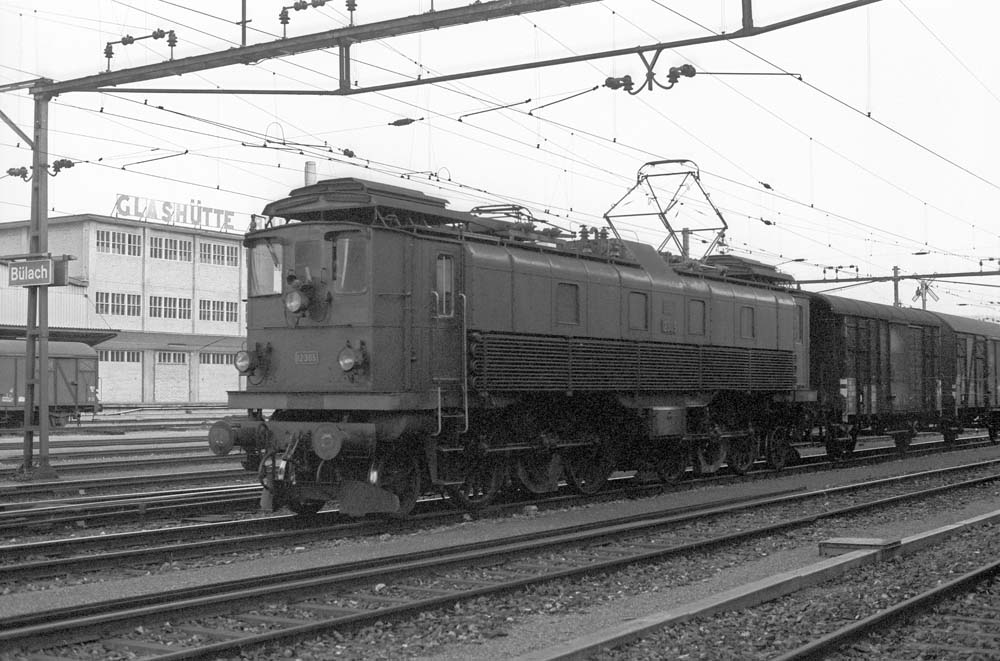 On 20 December 1974, shortly before Christmas, Be 4/6 12305 shunted a few older goods wagons with wooden superstructures. In the background is a building belonging to the Bülach Glassworks, another industrial company that still exists but no longer manufactures at Bülach. Photo: © Edi Meier, Bülach
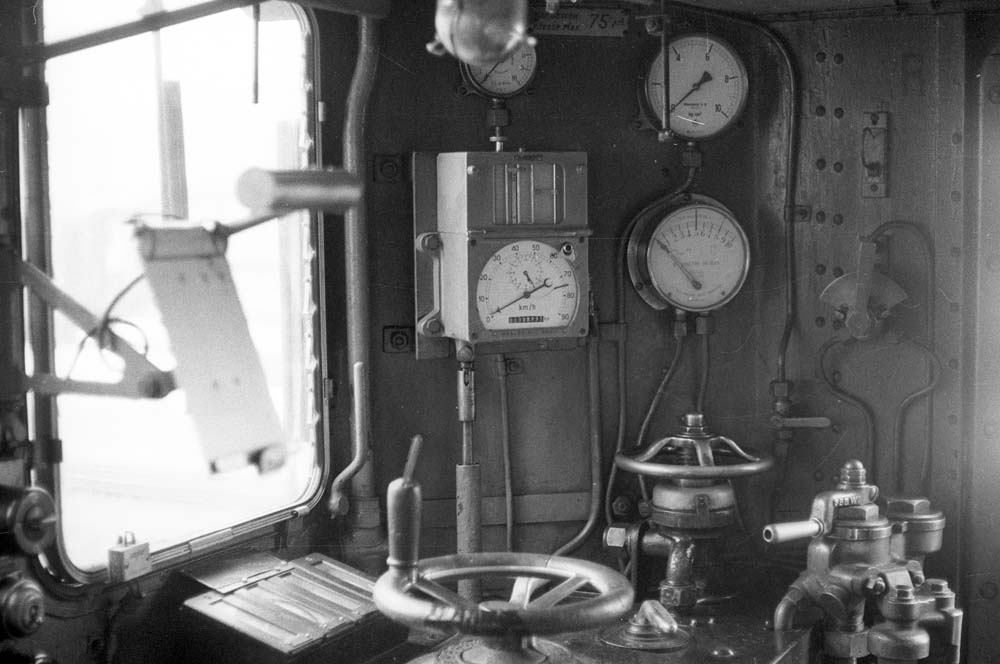 Naturally, we photography students caught the attention of the Bülach train drivers, and one or two of them invited us to take a look inside the driver’s cab. Stefan Unholz captured the driver’s cab of Be 4/6 12305 on camera on one such occasion. Photo: © Stefan Unholz, Winterthur
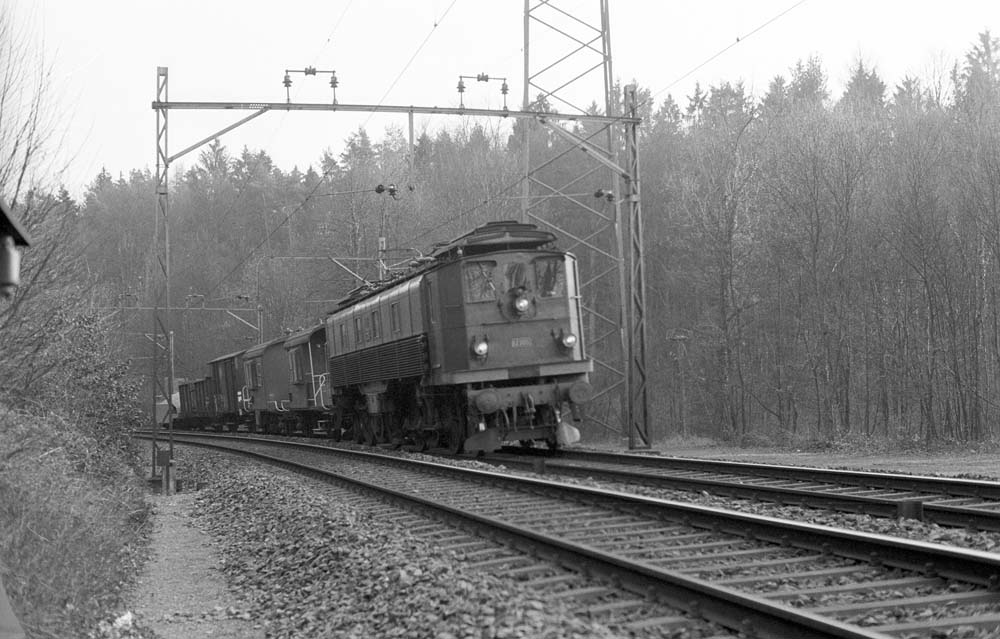 Here is locomotive 12305 on 25 February 1975, pulling train 8049 on the first curve after Bülach. Note the beautiful lattice pylon of the catenary with its yoke (no, not the lattice pylon of the high-voltage line…). Here’s an anecdote to go with it… Photo: © Edi Meier, Bülach
One of the Bülach engine drivers even invited me to ride along on a Be 4/6 locomotive one day. One day, as a supposed ‘assistant driver’, I boarded Be 4/6 12320 and was allowed to accompany him for his entire shift. We set off towards Eglisau with a heavy train. It soon became clear that the locomotive had a slight flat spot. But that wasn’t a problem, he said; he would now show me how to fix it. On the straight stretch between Glattfelden and Eglisau, he applied the brakes to the train, but at the same time released the locomotive’s brakes. Then he shifted up a gear vigorously until the wheels spun. As he did so, he asked me to look out of the window and watch the side of the locomotive… It was clearly visible that the middle section was moving back and forth across the track. Due to the heavy transformer in the centre of the locomotive, the body twists under heavy load. An impressive experience! And yes: the flat spot was gone. And even more importantly: the locomotive survived the procedure unscathed and is still in service today as a historic locomotive.
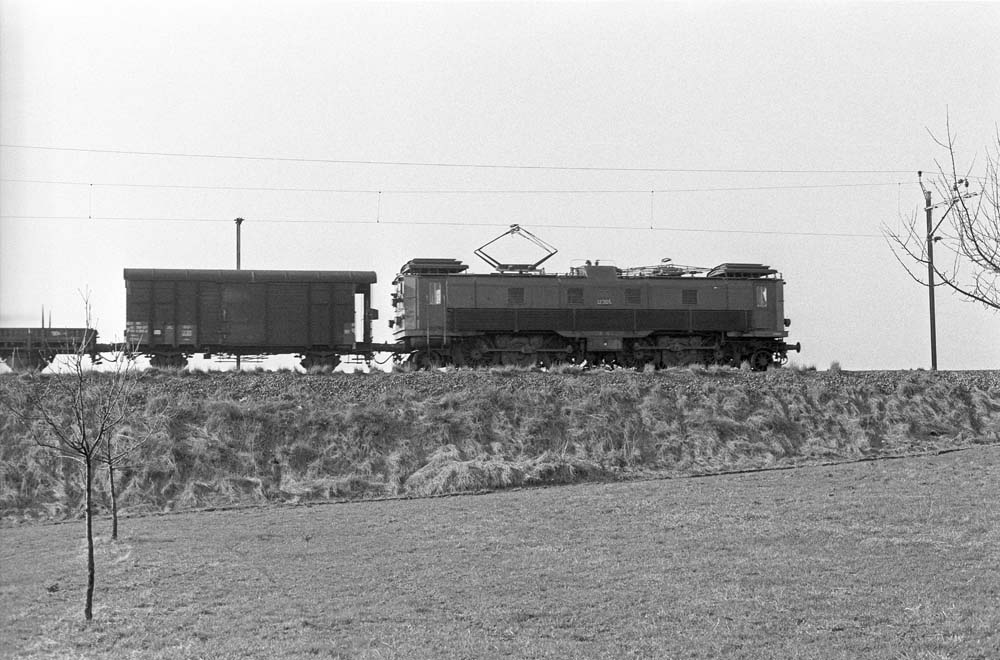 Be 4/6 12305 displays its striking silhouette in front of freight train 8049 near Höri. 27 February 1975 Photo: © Edi Meier, Bülach
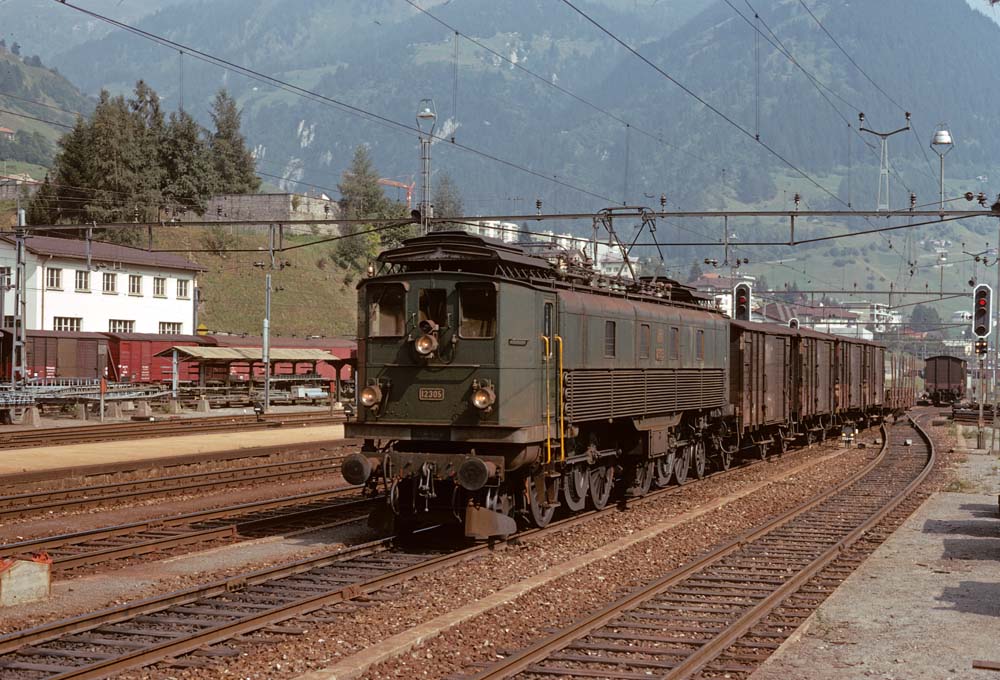 The return of a repaired or overhauled Be 4/6 from the Bellinzona workshop was always a special occasion. Usually, this locomotive was assigned to a light train and crossed the Gotthard under its own power. Unfortunately, I missed this, so I asked my colleague Christian Zellweger for help, which he promptly provided. Many thanks! The Be 4/6 12305 had just reached Airolo in the autumn of 1973 with its authentic freight train 16627. Photo: © Ralph Schorno / Christian Zellweger Collection
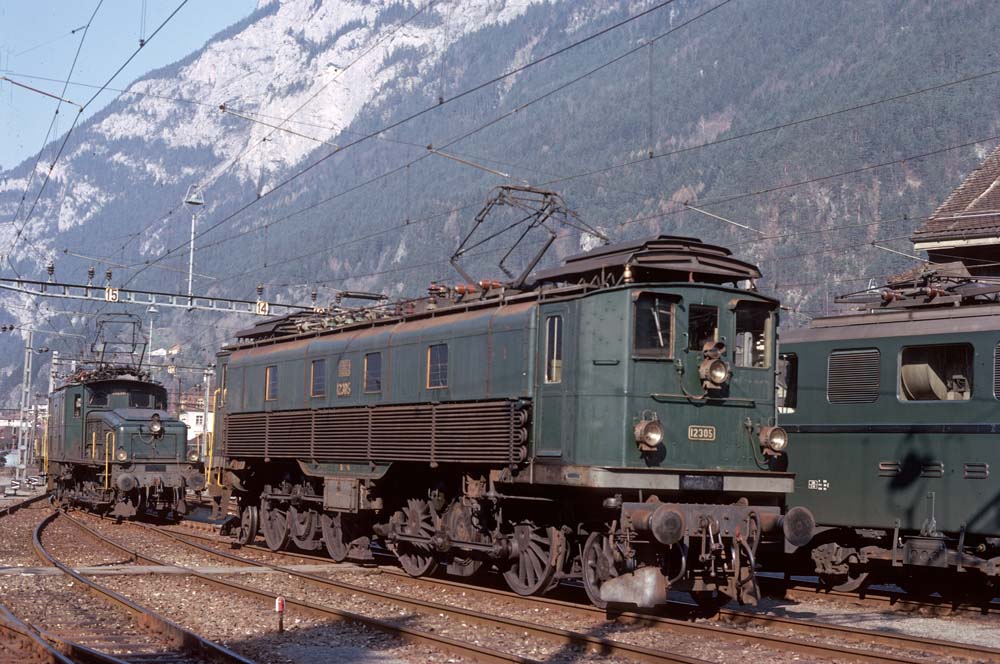 On 22 February 1975, after crossing the Gotthard, the Be 4/6 12305 reached Erstfeld depot, where it was photographed alongside another veteran, the Be 6/8 II 13254, by Christian Zellweger. Photo: © Christian Zellweger
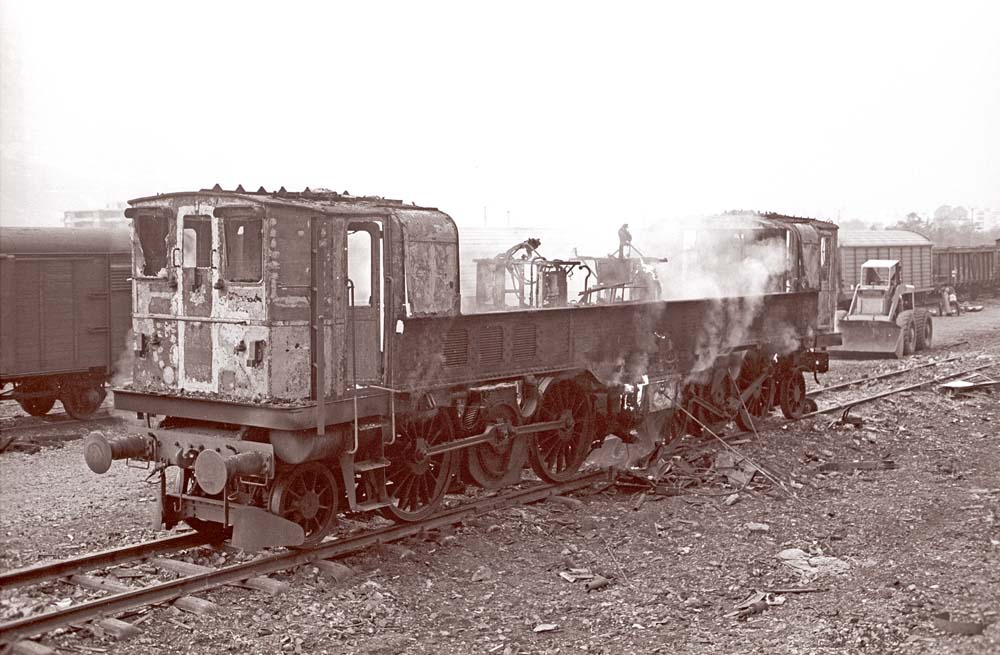 Later in 1975, Be 4/6 12305 developed a fault and had to be towed to Bellinzona for repairs. Rumours quickly spread among photographers that the towing operation had not been properly organised or carried out, and that the locomotive had sustained further damage in the process. Shortly afterwards the news came of its withdrawal from service, followed by its scrapping in Biasca. This backlit photograph shows that the rear bogie is severely damaged. The drive rod is bent and the motor journal is no longer aligned with the wheel journals. 7 October 1975 Photo: © Edi Meier, Bülach
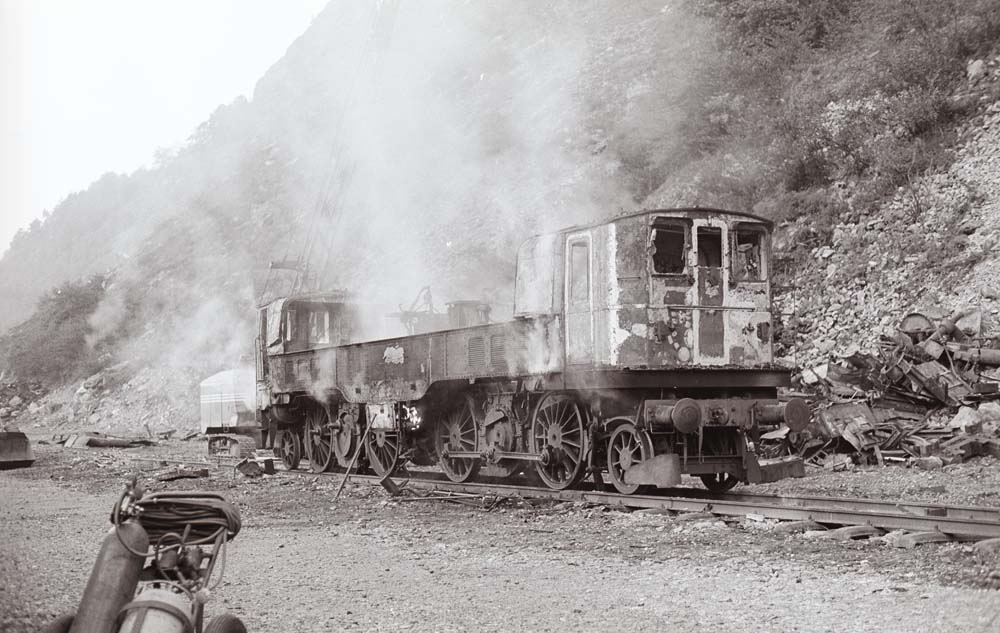 A sad, yet somehow fascinating image: the smoking Be 4/6 12305 with torn-open side walls at the scrapping site in Biasca. It is possible that the already missing side walls also correspond with the 1969 swap with the 12310… The fact that the oil-soaked wooden parts and the sheathing of the electrical cables were removed by means of a deliberately set fire was common practice at the time and would bring the environmental protection authorities onto the scene today… Photo: © Edi Meier, Bülach
Comments and additions to this railway history can be sent to EG at sgeg dot ch, or use the form to our Vice President Edi Meier. Thank you for your help.
Back to railway stories.