Members and friends of the SGEG who regularly visit our website will probably not be too surprised that we are presenting a piece on railway history to coincide with our next excursion.Everyone is familiar with Arth-Goldau station, either from changing trains there or as the starting point for a trip up to the Rigi. Arth-Goldau is also an important starting point for the Südostbahn. So there is certainly plenty of material for a few look-backs…
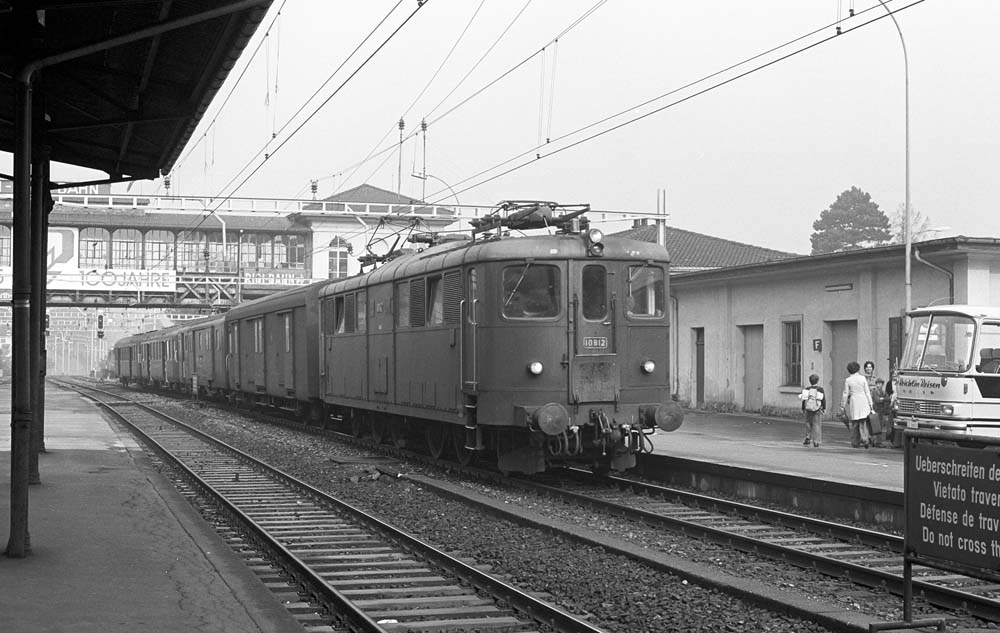 Let’s start with a typical Gotthard locomotive, which was, however, less well known to the general public and rather unpopular with train drivers. The Ae 4/6 10812 is pulling its Lucerne – Erstfeld passenger train 1516 into Arth-Goldau. Above the rear of the train, you can see the Rigibahn’s famous elevated cross-platform station. Behind the locomotive is a (presumably manned) mail van, as was often the case at the time. 30 July 1977 Photo: © Edi Meier, Bülach
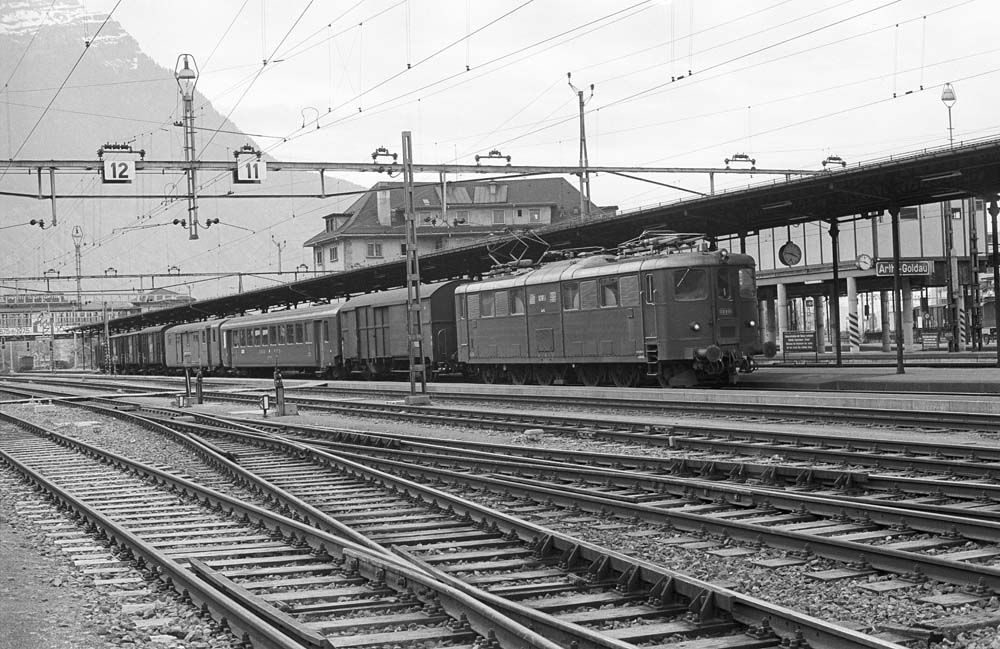 The Ae 4/6 was more frequently seen hauling mail, luggage and light goods trains than passenger trains. Here, the Ae 4/6 10811 stands with its motley train on the southernmost platform, Track 1, whilst mail and general cargo are being loaded and unloaded. This train was probably also listed in the timetable as a mixed goods and passenger train (GmP) on certain sections of the route. The modernised Einheitswagen I carriage suggests as much. In the background: the Rigi, still covered in snow in mid-May. 11 May 1977 Photo: © Edi Meier, Bülach
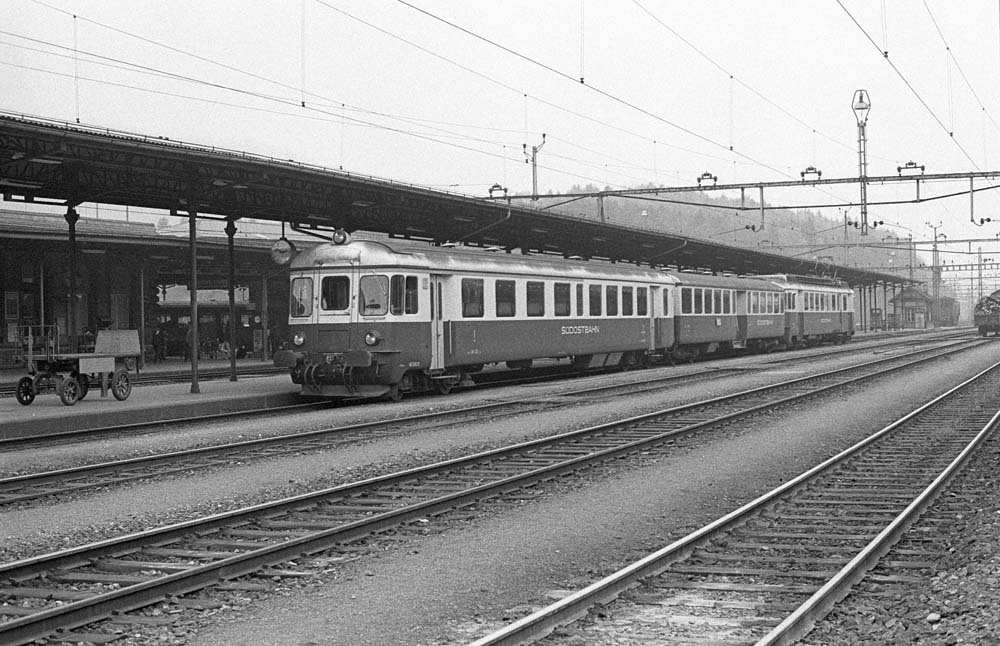 The Voralpen Express of the Südostbahn (SOB) and its then partner BT (now merged) is also stopping at the same platform as before. It was common for three- or four-car shuttle trains to be assigned to these services. Less typical is the centre-access intermediate carriage, as normally only the newest standard carriages were used on this prestige train. However, it is unlikely that this is a regional passenger train (where centre-entry carriages were usually found), as these normally depart from the northernmost platform, Track 6, on the other side of the station, so as not to have to cross all the SBB tracks. SOB ABt 202 + B 214 + BDe 4/4 81 or 82 on 27 April 1974 in Arth-Goldau Photo: © Edi Meier, Bülach
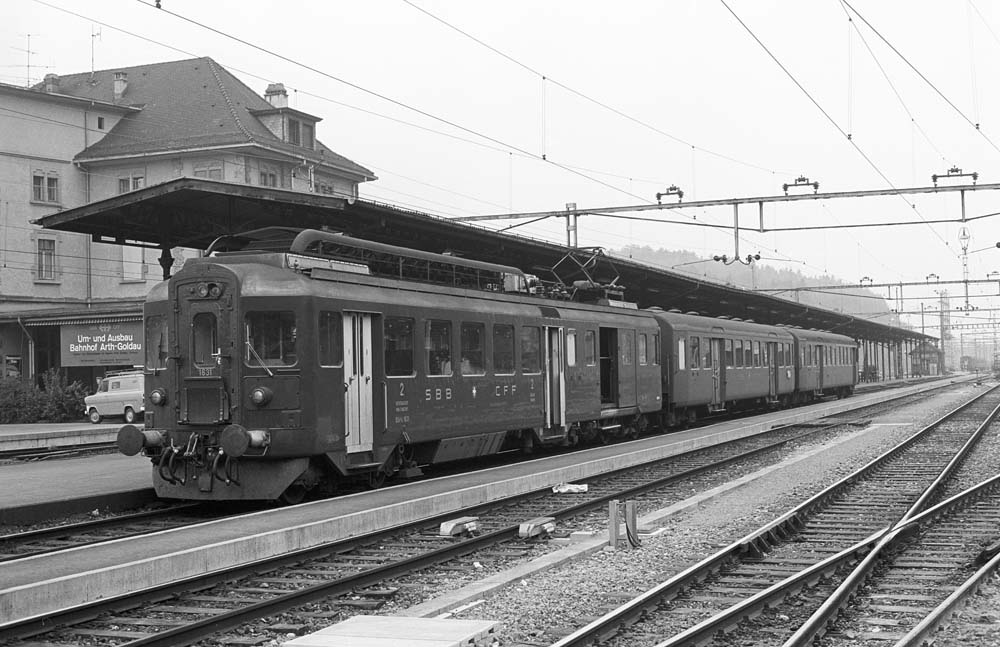 Track 1 was also the departure point for trains bound for Rotkreuz – Südbahn – Lenzburg. For many years, this was the domain of BDe 4/4 shuttle trains. Here, the BDe 4/4 1631 + B intermediate carriage + ABt 50 85 37 – 03 900-2 waits for its passengers on 7 October 1975. Photo: © Edi Meier
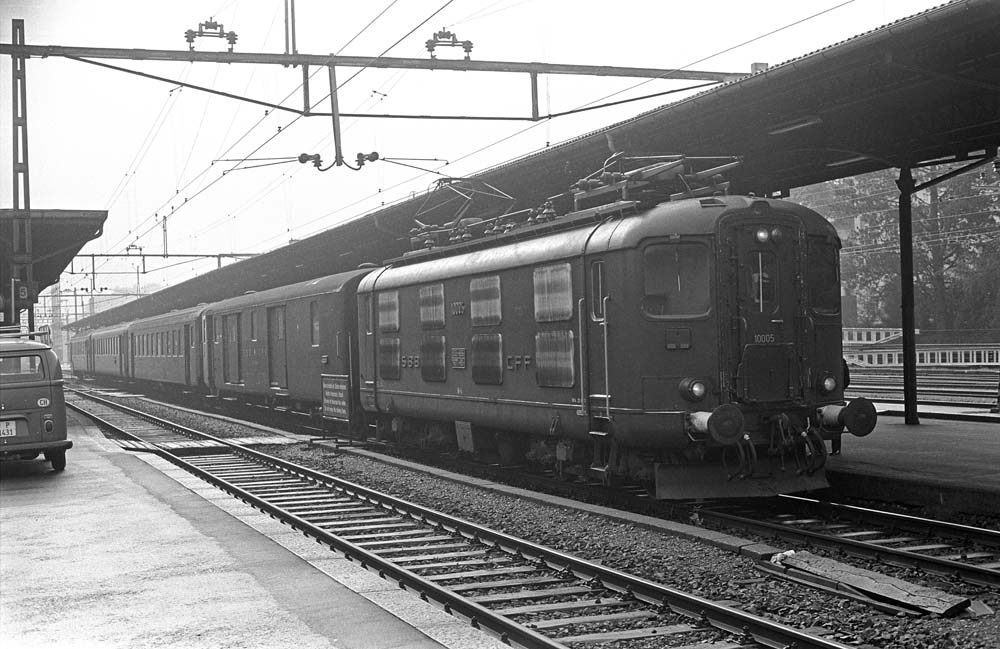 In 1977, the typical formation of passenger trains on the Gotthard line consisted of Re 4/4 I shuttle trains. Unfortunately, I only have this backlit photograph of the Re 4/4 I 10005 at Arth-Goldau station. Lined up behind the locomotive is one of the few (10 in total) DZ light steel carriages, easily recognisable by the postbox (above the ‘No Trespassing’ sign). Arth-Goldau, 30 July 1977 Photo: © Edi Meier
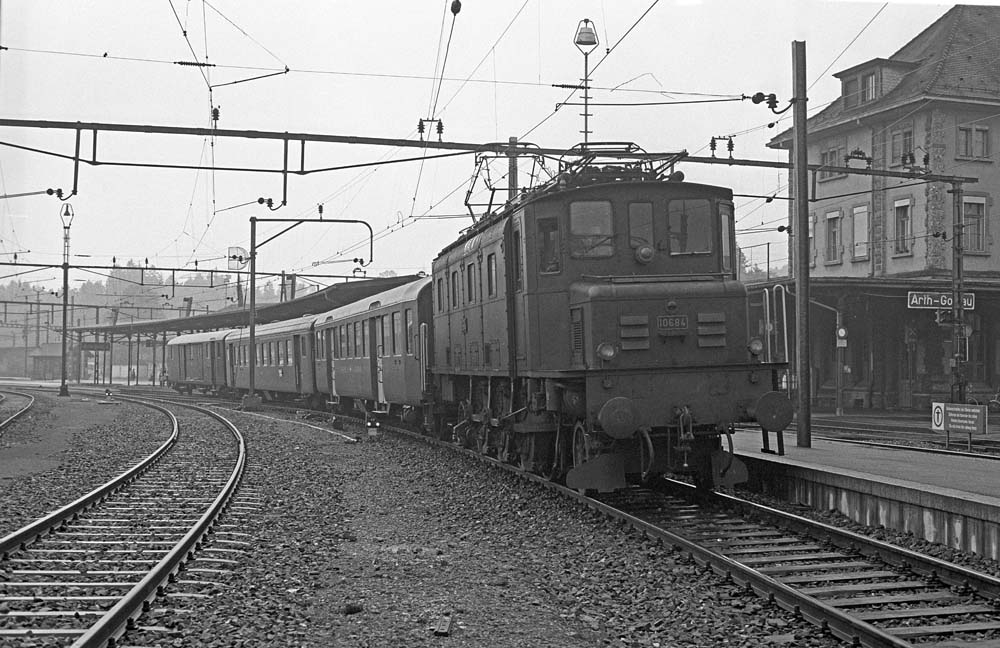 The short passenger train from Arth-Goldau towards Zug was hauled by the Ae 3/6 I 10684 on 30 July 1977. It is positioned well forward in the exit curve. Arth-Goldau, 30 July 1977 Photo: © Edi Meier
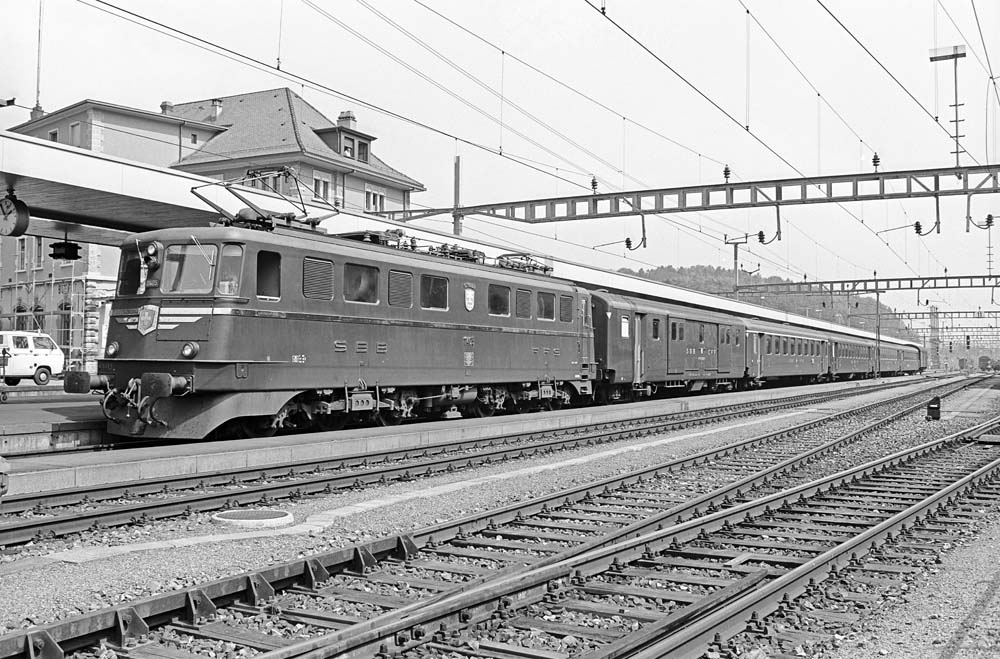 In 1984, Ae 6/6 locomotives could still be seen hauling passenger trains. This uniform train formation, comprising the Ae 6/6 11405 “Nidwalden” and Standard Class I and II carriages, is not very typical of express trains on the Gotthard line, where a motley assortment of carriages was often seen. The overall picture is only slightly marred by the last carriage, presumably a mail van. Goldau, 31 August 1984 Photo: © Edi Meier
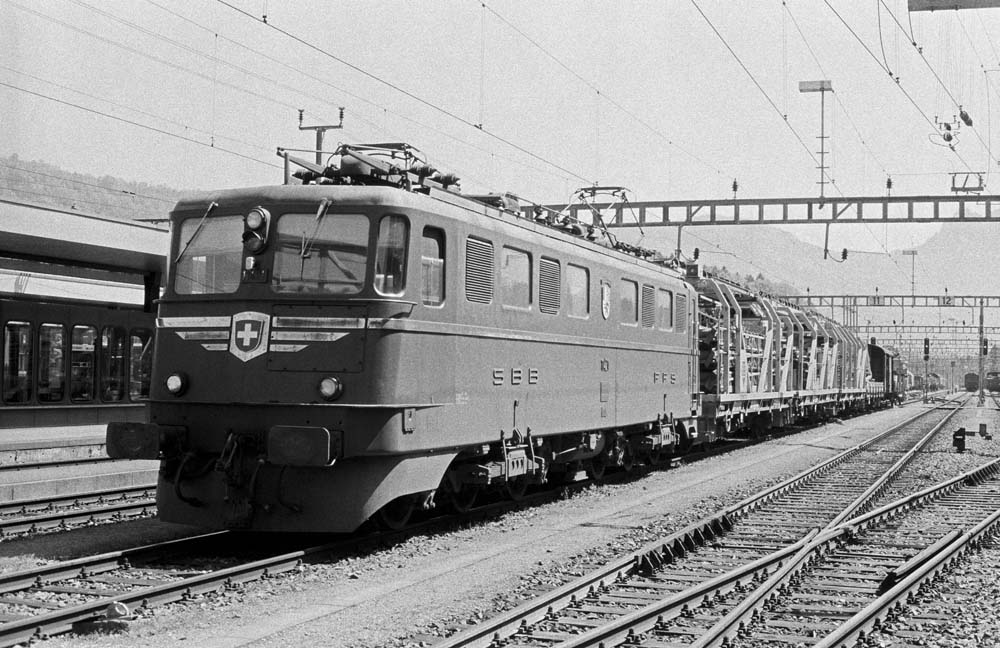 Let’s stick with the Ae 6/6s. Naturally, they were more frequently seen hauling freight trains. Behind the Ae 6/6 11421 “Graubünden” are special freight wagons. Goldau Photo: © Edi Meier
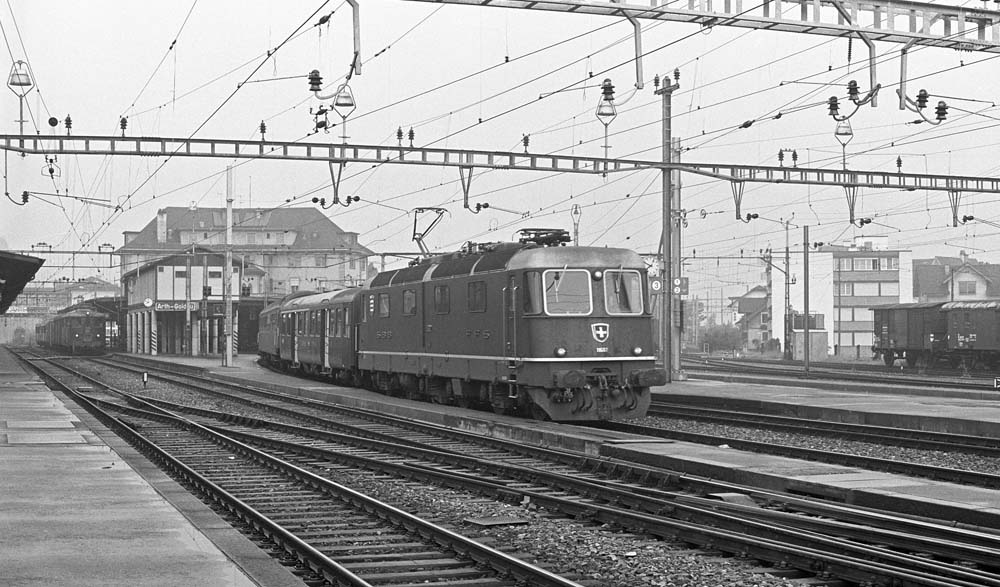 When the first Re 6/6 locomotives appeared in 1972 – here the prototype 11602 – the last Ae 4/6s were still in service, as this picture shows, featuring the Ae 4/6 10812 already encountered, with the train from the first picture in the background. Instead of the platform roof between tracks 3 and 4, a temporary structure on stilts has been erected due to the renovation work. This photo clearly shows the wedge-shaped track layout with the station building in between (on the platform with tracks 3 (Lucerne side) and 4 (Zurich side / SOB) 30 July 1977 Photo: © Edi Meier, Bülach
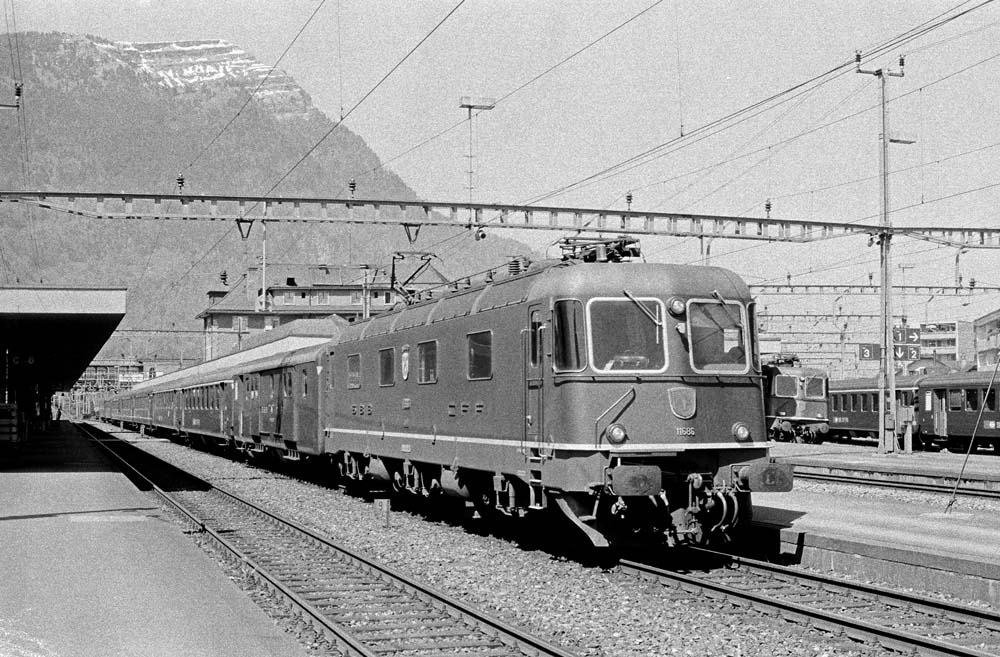 Later, the Re 6/6 replaced the tried-and-tested Ae 6/6. In the foreground is the Re 6/6 11686 with its express train from Lucerne heading south. To its right is locomotive Re 4/4 II or III with the express train from Zurich. This is the typical situation where, at Arth-Goldau, passengers could change between the fast train and the slower train with several stops. Photo: © Edi Meier, Bülach
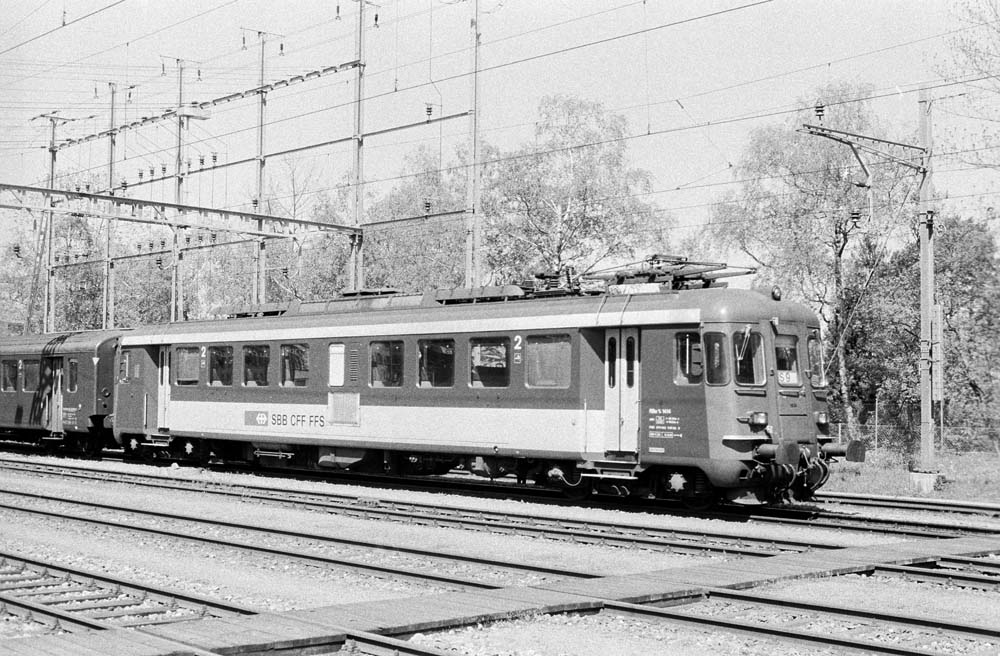 Over time, the Ae 4/6, Re 4/4 I and BDe 4/4 disappeared from passenger services and were replaced by the RBe 4/4, with the class being reclassified as S-Bahn trains. Here is one of the prototype conversions, the RBe 4/4 1411 (yes: still without a computer number!), in its blue and white livery, but still without external swing doors and with the ‘S9’ sign on the front door. Photo: © Edi Meier, Bülach
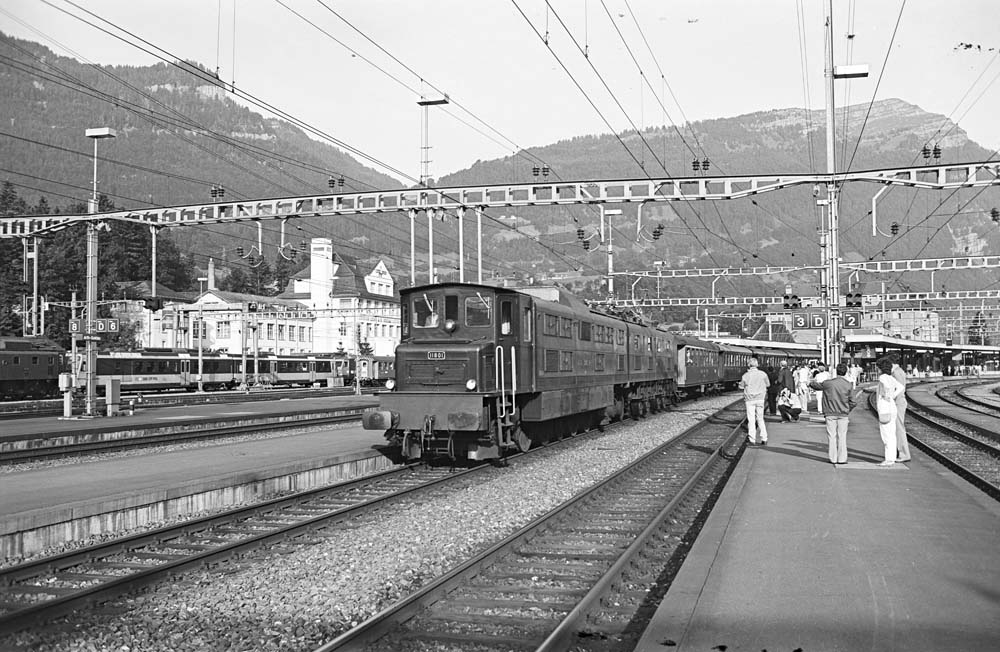 Of course, special trains also passed through Goldau from time to time. Here, the Ae 8/14 11801 double locomotive has one such train in tow. The stop at Arth-Goldau gave some passengers the chance to snap a souvenir photo. To the left of the Ae 8/14 is the building of the Luxram light bulb factory, founded in 1905, which had to close in 2019. The Rigi towers above it all. 30 June 1985 Photo: © Edi Meier, Bülach
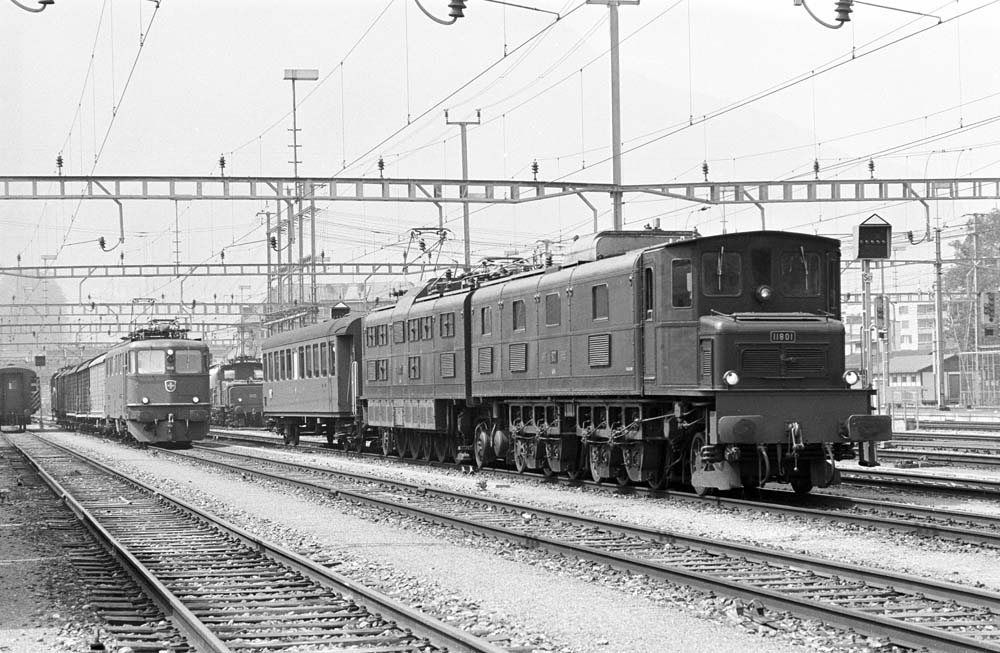 Gotthard locomotives among themselves… The Ae 8/14 11801 with a heavy B unit and the Ae 6/6 11426 on a freight train in the Arth-Goldau sidings, where freight trains could (and can) sometimes be set aside and overtaken by passenger trains (often in conjunction with a change of driver). Individual trains were also re-formed. The Ee 3/3 between the two trains was used for these shunting tasks. 31 August 1984 Photo: © Edi Meier, Bülach
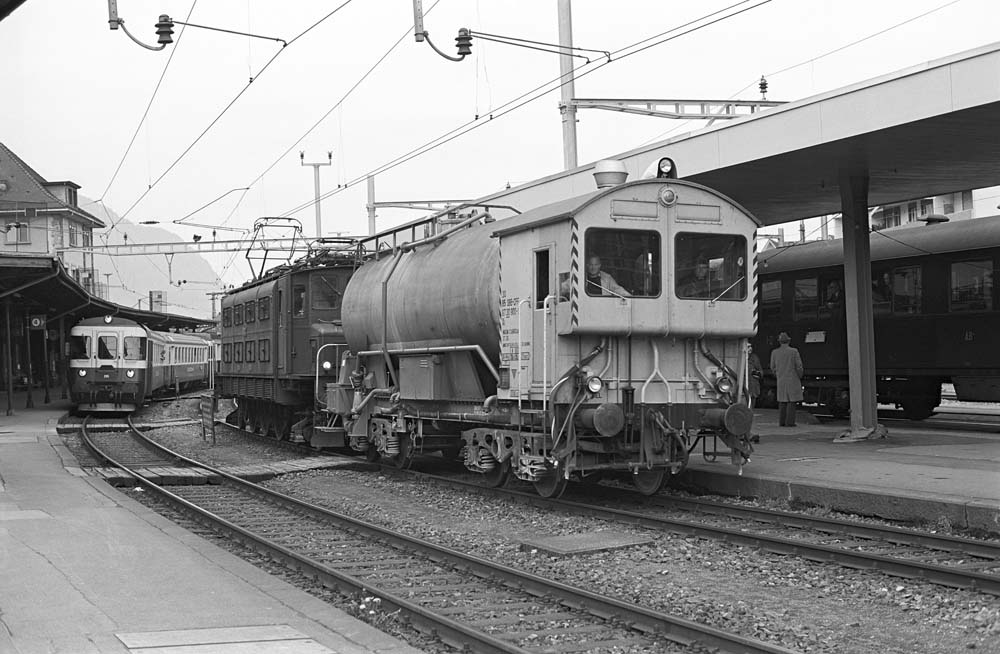 On 30 April 1981, the weed removal train with the Ae 3/6 I 10684 (coincidentally exactly the same locomotive as above with the short passenger train) and a scheduled SOB passenger train met at Arth-Goldau. Exceptionally, this was on platform 4 rather than platform 6, as the latter was occupied by another special train… Photo: © Edi Meier, Bülach
Anyone wishing to find out more about weed control at SBB can find further information in railway story of 21 June 2024.
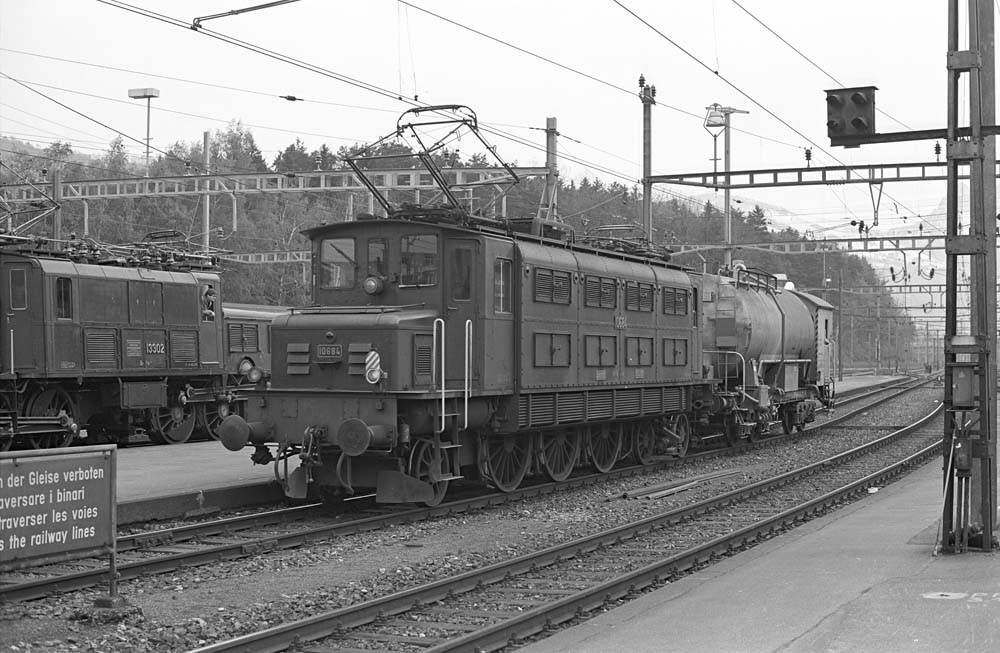 … the aforementioned special train for photographers was hauled by the ‘Crocodiles’ Be 6/8 II 13256 + Be 6/8 III 13302. As the weed removal train departed for Schwyz, the latter posed in the background. The special train bound for the SOB was due to depart shortly afterwards, so I had to hurry… 30 April 1981 Photo: © Edi Meier, Bülach
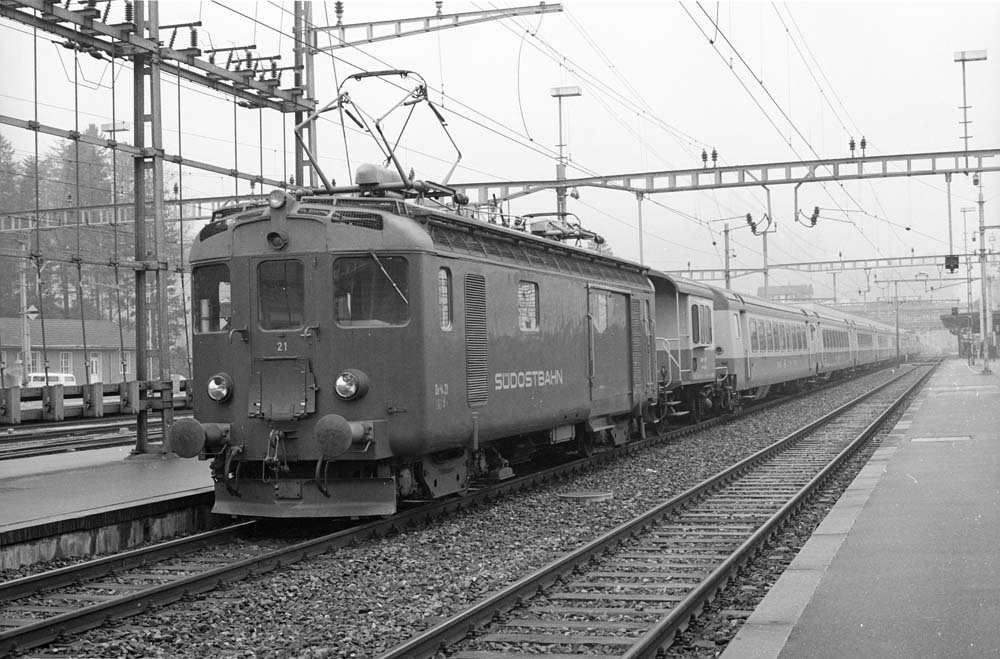 On 8 April 1984, in inclement weather (probably for the first and last time), a shortened Swiss Express crossed the steep gradients of the Südostbahn and required assistance from the De 4/4 21 pusher railcar, which remained with the train as far as Arth-Goldau. As this railcar, unlike the Swiss Express, does not have an automatic coupler, a Sputnik transition car was coupled in, probably the only time it was used on a manned train… Here, the De 4/4 21 has reached the end of its service in Arth-Goldau. Photo: © Edi Meier, Bülach
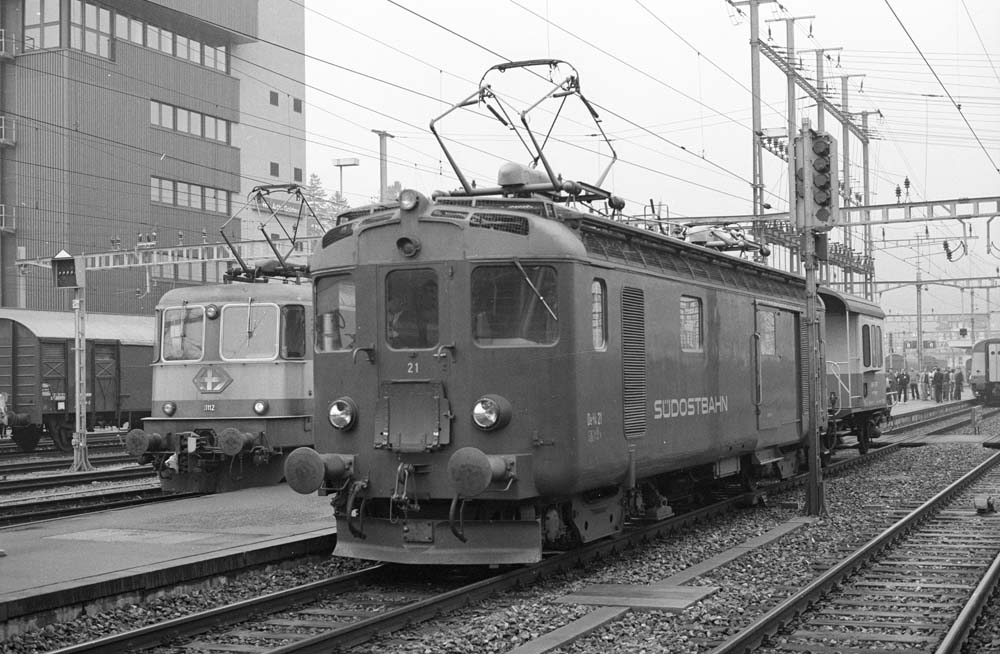 The Re 4/4 II 11112 was uncoupled to allow the train to be moved round, as were the De 4/4 21 and the Sputnik. This led to a meeting of two city express locomotives from different generations. Whilst only three RFe 4/4 601–603 locomotives were built and were quickly sold to private railways because they proved to be too weak, the Re 4/4 II was the SBB’s most successful locomotive of all time, with over 300 units built. Goldau, 8 April 1984 Photo: © Edi Meier, Bülach
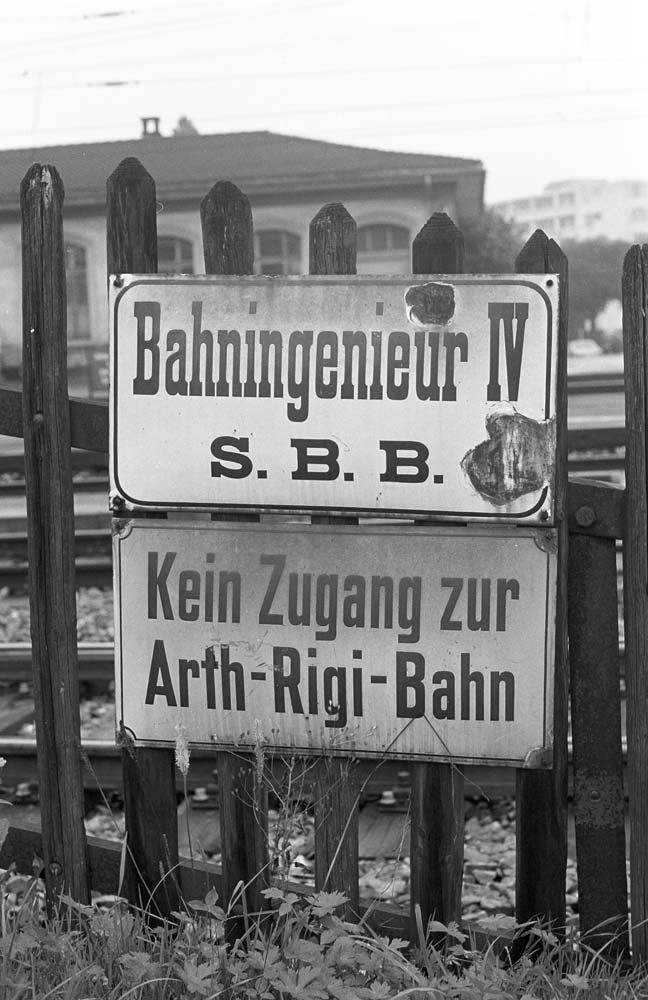 Finally, let’s move on to the Rigi Railway. As late as 30 July 1977, this combination of signs was still hanging on the garden fence near the Rigi Railway. Both the SBB District 4 and the Rigi Valley Railway were long gone by this point… Photo: © Edi Meier, Bülach
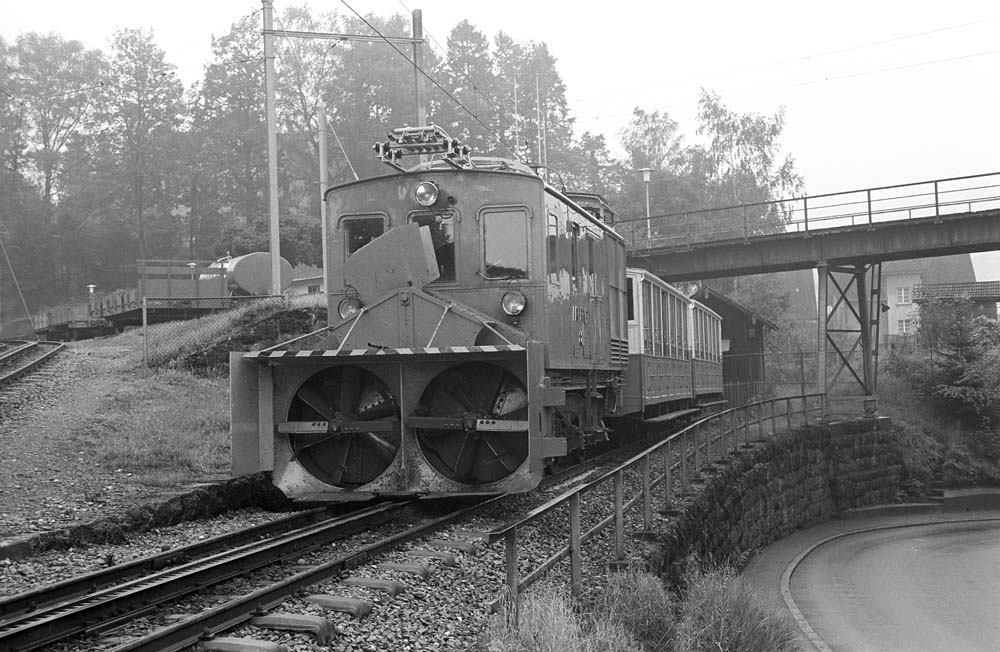 Directly opposite these signs, a track stub served as a reminder of the start of the Rigi Valley Railway down to Lake Zug and Arth. The Rigi Rack Railway used the track as a stabling area for the reserve train comprising locomotive 8 and two series 31–34 trailers. Above the train, the Rigi Railway’s elevated station is visible, and to the left are a few parked goods wagons. As the Rigi Railway’s vehicles do not have adhesion traction, a rack is also present on this flat section of track. 30 July 1977 Photo: © Edi Meier, Bülach
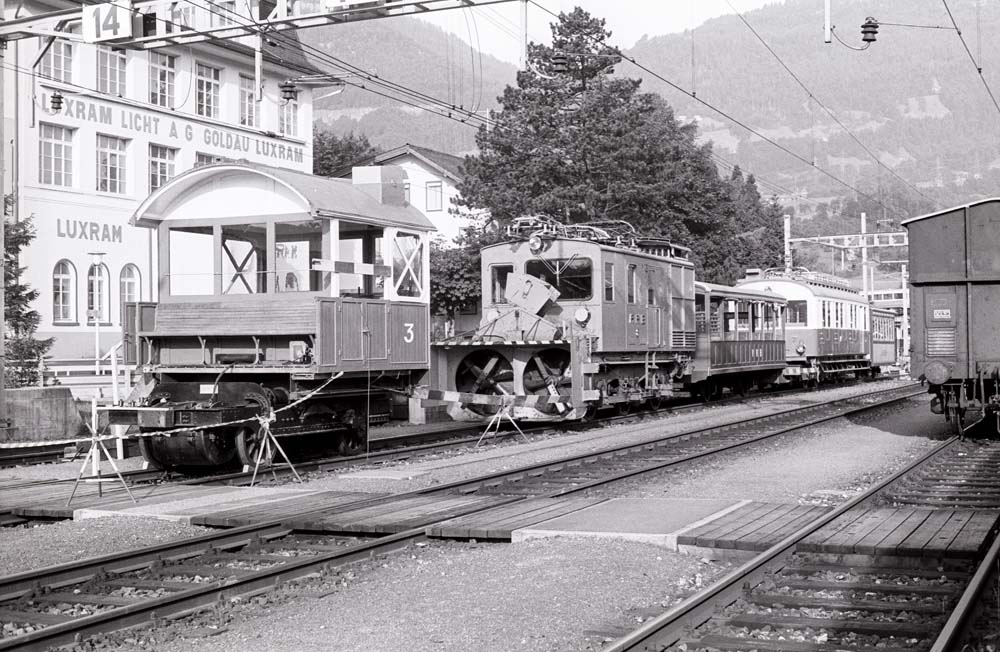 On 30 June 1985, during an open day, various Rigibahn vehicles were on display on the southernmost track at Arth-Goldau, including the driver’s cab of railcar 3, which had been detached for the Swiss Museum of Transport, snow-clearing locomotive 8 with a B 31–34, and railcar 3 with the B 35. On the right, an FS pointed-roof goods wagon peeks into the frame… Photo: © Edi Meier, Bülach
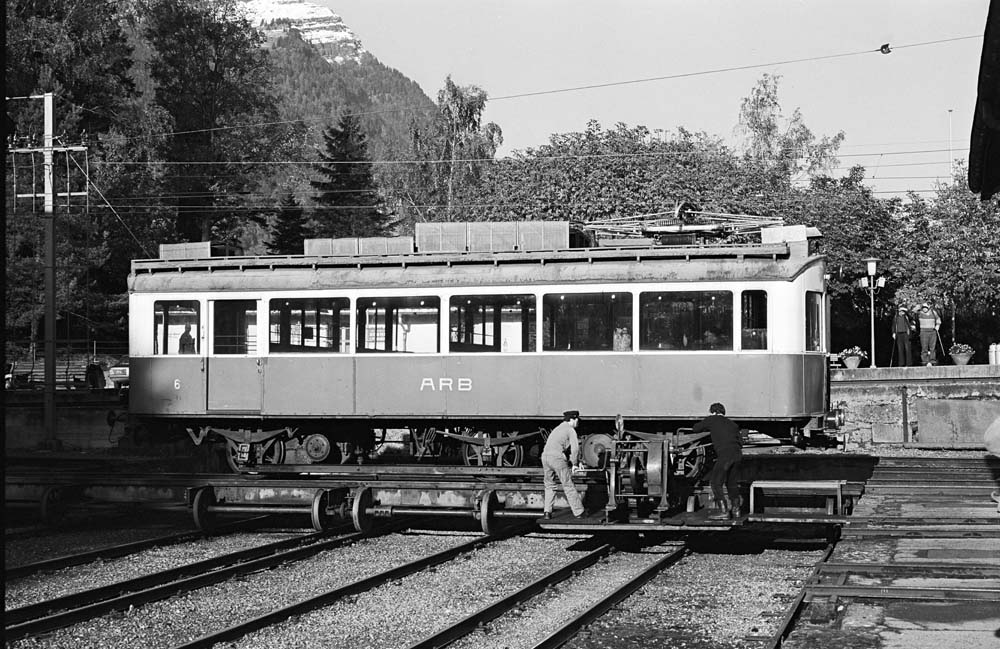 Rigibahn railcar 6, still in its old blue and white livery, stands on the historic push-pull platform in the Rigibahn depot area. Moving it manually required two men at the cranks. This push-pull platform has now been replaced by a motorised one. Railcar 6 has now been restored to perfection and is a frequent delight for history-loving travellers. 12 October 1982 Photo: © Edi Meier, Bülach
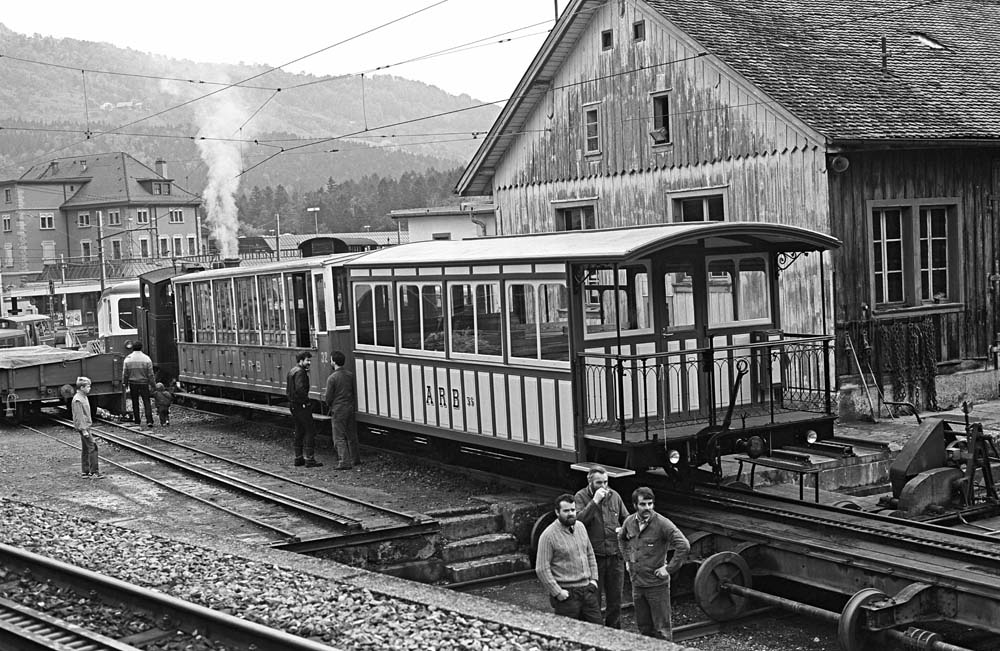 Exceptionally, on 2 November 1985, the Vitznau Rigi Railway’s H 16 steam locomotive made its way to Arth-Goldau for a special trip. The blue and white ARB B 32 and the already historically restored B 35 served as lead carriages. The now-merged VRB and ARB were completely separate for a long time, and there was no connecting point at Rigi Staffel as there is today. The steam train stands ready next to the depot. The transfer table is visible in the right-hand corner. Photo: © Edi Meier, Bülach
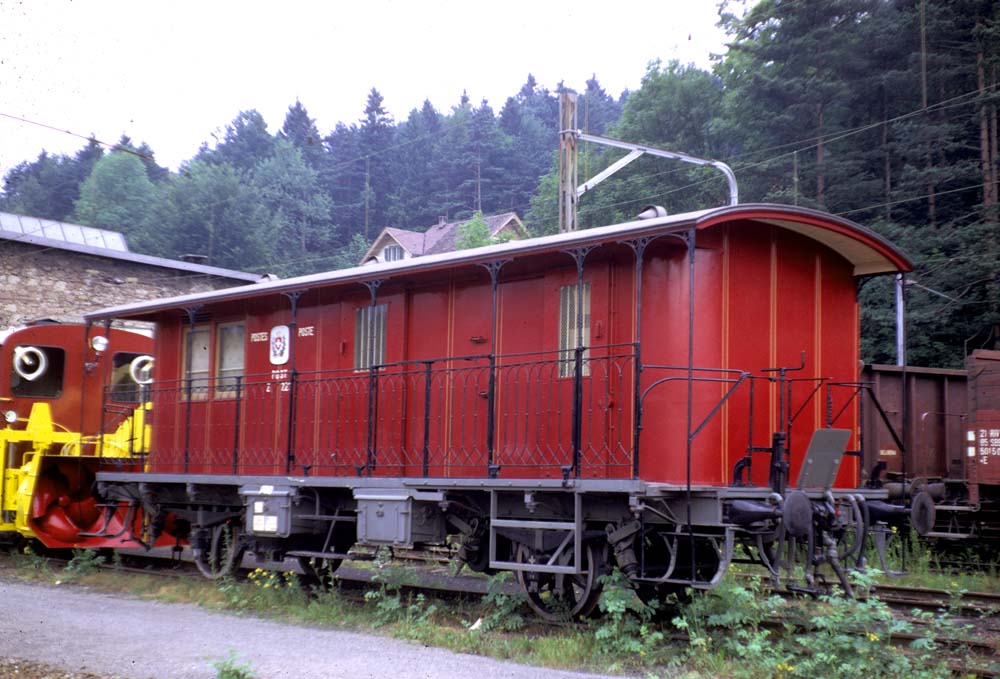 As we are also visiting the former depot in Arth-Goldau, here is a final photograph from this site. On 16 July 1972, the freshly restored Z 223, with its open side gangway, stood alongside the new SBB snow blower in the overgrown track area behind the depot. Photo: © Edi Meier, Bülach
Comments and additions to this railway history can be sent to EG at sgeg dot ch, or use the form to our Vice President Edi Meier. Thank you for your help.
Back to railway stories.